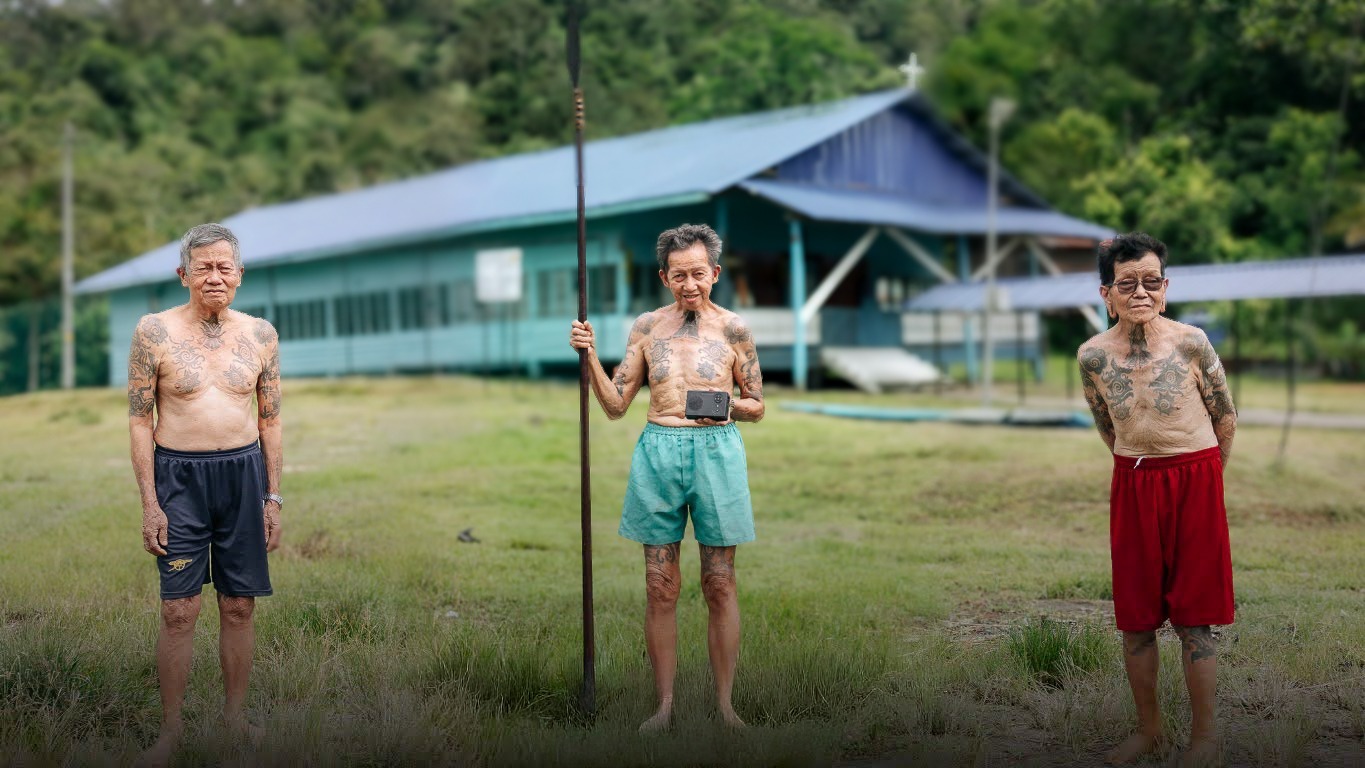
In June 2026, the FCBH Malaysia team traveled to Long Lidem, deep in the island of Borneo, to join the Punan Vuhang people in celebrating the launch of the Punan Vuhang Oral Bible Translation (OBT). We took the opportunity to sit with several elders and community leaders to learn about how the Gospel first reached this remote community many years ago.
Before the Gospel came
The elders described a time when the Punan Vuhang people lived closely connected to the forest. They hunted, fished and gathered sago and other food according to what the land provided.
Their spiritual practices were also tied to the world around them. They followed signs from birds, flowers and dreams. Different bird calls could influence whether someone continued travelling, crossed a river, went hunting or began a particular task.
“If the bird called from the wrong side, we would not continue,” one elder explained. This was the way decisions had been made for generations.
Around the 1960s, an Englishman came and taught several villagers the alphabet and some basic reading and writing. Looking back, one of the elders believed that this small beginning was part of how God was preparing the community.
A journey that changed the village
One day, a Kenyah man from Indonesia became stranded near the Punan Vuhang community. Four men from the village offered to help him carry his belongings and books back home. The journey took about two weeks and brought them across the border into East Kalimantan.
While there, the four men joined the Kenyah community for prayer and worship. They watched the believers sing, pray and worship God together.
The elders still remember being deeply moved by what they saw. Their hearts were drawn to the worship, and they began to feel that this was something good—not only for themselves, but also for their village.
“Don’t forget the Name of God”
When the men arrived back in the village, they began to pray and sing. One of the earliest songs remembered by the elders carried a simple message: “Don’t forget the Name of God.”
It was not easy at first. There was no formal church, organised programme or trained ministry team. Their village was remote, roads were difficult and there was no nearby church or pastor they could approach. The village was deeply established in their customs and spiritual beliefs. People were hesitant and practices connected to bird signs remained influential.
But the four men continued. The Gospel spread through their prayers and songs. Slowly, more people began to gather with them. Eventually, the believers built a simple place of worship using bamboo and wood. According to the elders, this was the beginning of Christian worship among the Punan Vuhang people.
God’s Word in their heart language
Years later, we were privileged to be at their village to witness another significant moment in this story: the Punan Vuhang receiving the Gospels of Mark and John in their own language. Forty-two Proclaimers were distributed so that individuals, families and listening groups could hear Scripture together.
God’s love and power enabled an act of kindness - four men helping a stranger return home - to open the door to the Gospel for an entire village.
Join the Mission: https://www.faithcomesbyhearing.asia/get-involved/give
.svg)